DTF vs. Screen Printing: Which Is Better for Small Orders?
← All apparel buying & printing guides
DTF is often a practical choice for small orders and colorful artwork. Screen printing is worth quoting for larger batches of the same design, especially with a limited number of colors. The right choice depends on your artwork, garment, quantity, and whether you want ready-to-press transfers or finished shirts.
If you are comparing DTF vs. screen printing for a team, a small business, or your first merch release, start with the finished order you need. A low transfer price is only one part of the total.
What is the difference between DTF and screen printing?
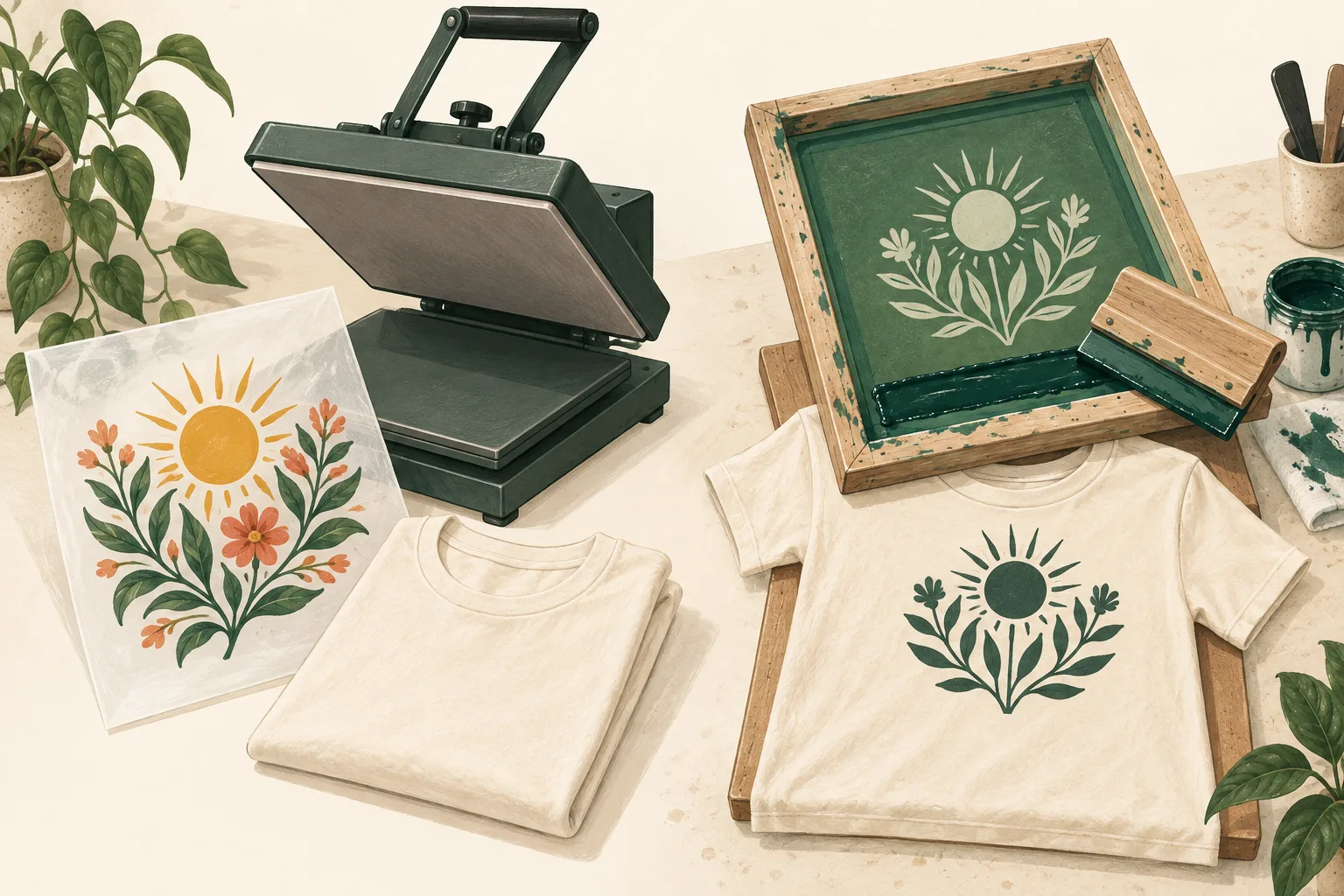
DTF means direct to film. A design is printed onto transfer film, prepared with adhesive, and applied to a compatible garment using a heat press. You can order ready-to-press transfers without owning a DTF printer.
Direct screen printing pushes ink through a prepared mesh screen onto the garment. A multicolor design generally requires separate screens and registration, which adds setup work before the batch can be printed.
Screen-printed transfers are a third option. They use screen-printed ink on a carrier and are applied with a heat press. They are not the same as printing directly onto a shirt. Make sure each quote identifies which process you are buying.
DTF vs. screen printing at a glance
| What matters | DTF transfers | Direct screen printing |
|---|---|---|
| Small quantities | Often a useful starting point because the artwork does not require individual screens. | Setup costs can represent a larger share of a small order. |
| Photos and gradients | Well suited to multicolor digital artwork. | Possible, but artwork separation and production requirements affect the quote. |
| Repeated simple designs | Compare the complete applied cost. | Worth quoting as quantity increases and setup is spread across more garments. |
| Application | Requires a suitable heat press when you order transfers only. | A finished-garment order arrives already printed. |
Compare the cost of finished shirts
Ask both suppliers to quote the same garment, print dimensions, placement, artwork, and quantity. For DIY transfers, include blanks, transfers, shipping, pressing labor, and any finishing or cutting. For finished apparel, check whether the quote includes setup, decoration, garments, and delivery.
There is no universal quantity where screen printing becomes cheaper. A small one-color logo and a large photographic print can produce very different comparisons. Request matching quotes instead of relying on a fixed “50-shirt” or “100-shirt” rule.
Three orders to think through
- A dozen shirts with a colorful illustration: start by pricing DTF. Compare buying transfers and pressing them yourself with ordering finished apparel.
- A few hundred shirts with one repeated, simple logo: request a screen-printing quote alongside DTF. Keep garment and print specifications identical.
- A reorder with different names or artwork: ask how each changed design affects setup and price. Separate the repeated logo from the personalized portion of the job.
What about feel and durability?
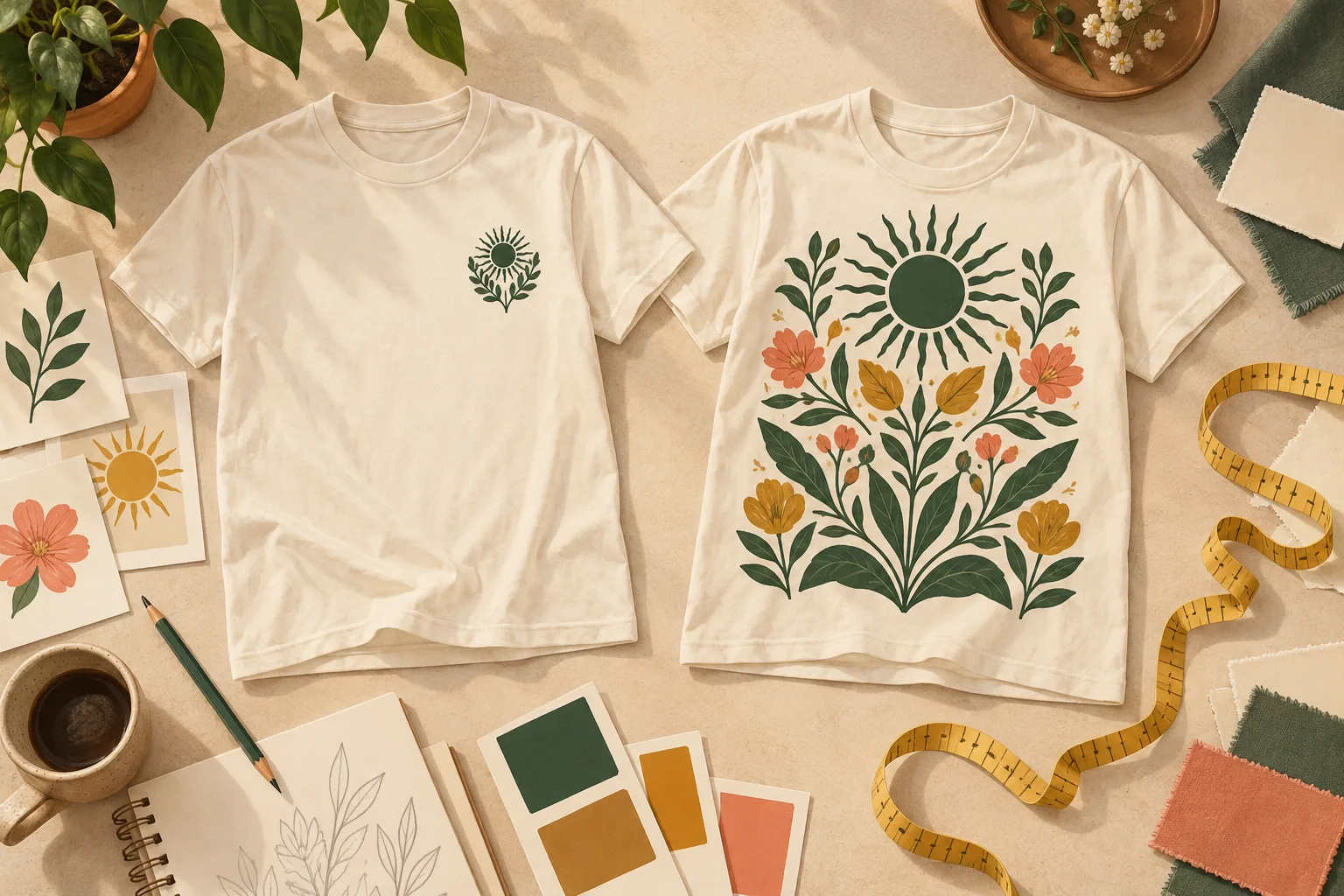
Ask for a sample on the fabric you plan to use. Compare a large solid print with artwork that leaves open space, and feel both while wearing the garment. A small chest logo does not tell you how a full-front design will feel.
For durability, ask for the supplier’s application and care instructions, and test a sample before a larger run. Avoid choosing from a promised wash count without knowing the test conditions. With transfers, follow the supplied temperature, time, pressure, peel, and finishing instructions rather than using a generic setting.
Choose your next step
If you have access to a heat press, explore Bear Imprint’s custom DTF transfers, then upload your artwork and check pricing by size and quantity. Transfers are separate from garments and pressing. Browse blank apparel and confirm that your chosen material is compatible before ordering.
If you need finished apparel or want help comparing methods, send our team your artwork, quantity, garment preference, print locations, and needed-by date. Those details make a useful quote possible.
Frequently asked questions
Do I need a DTF printer?
No. You can buy ready-to-press transfers. You still need appropriate heat-press equipment and must follow the transfer’s application instructions.
Is DTF the same as screen printing?
No. DTF uses digitally printed transfer film. Screen printing uses ink and a prepared mesh screen. Screen-printed transfers also exist, which is why the wording on a quote matters.
Is DTF always cheaper for small orders?
No. It is worth checking first, but compare total delivered and applied cost. Your design, print size, garment, and available equipment all affect the decision.
Further reading
- Roland DG: direct-to-film printing
- Transfer Express: DTF versus screen-printed transfers (a comparison of transfer products, rather than direct screen printing).
- Epson: DTF film printing guide